

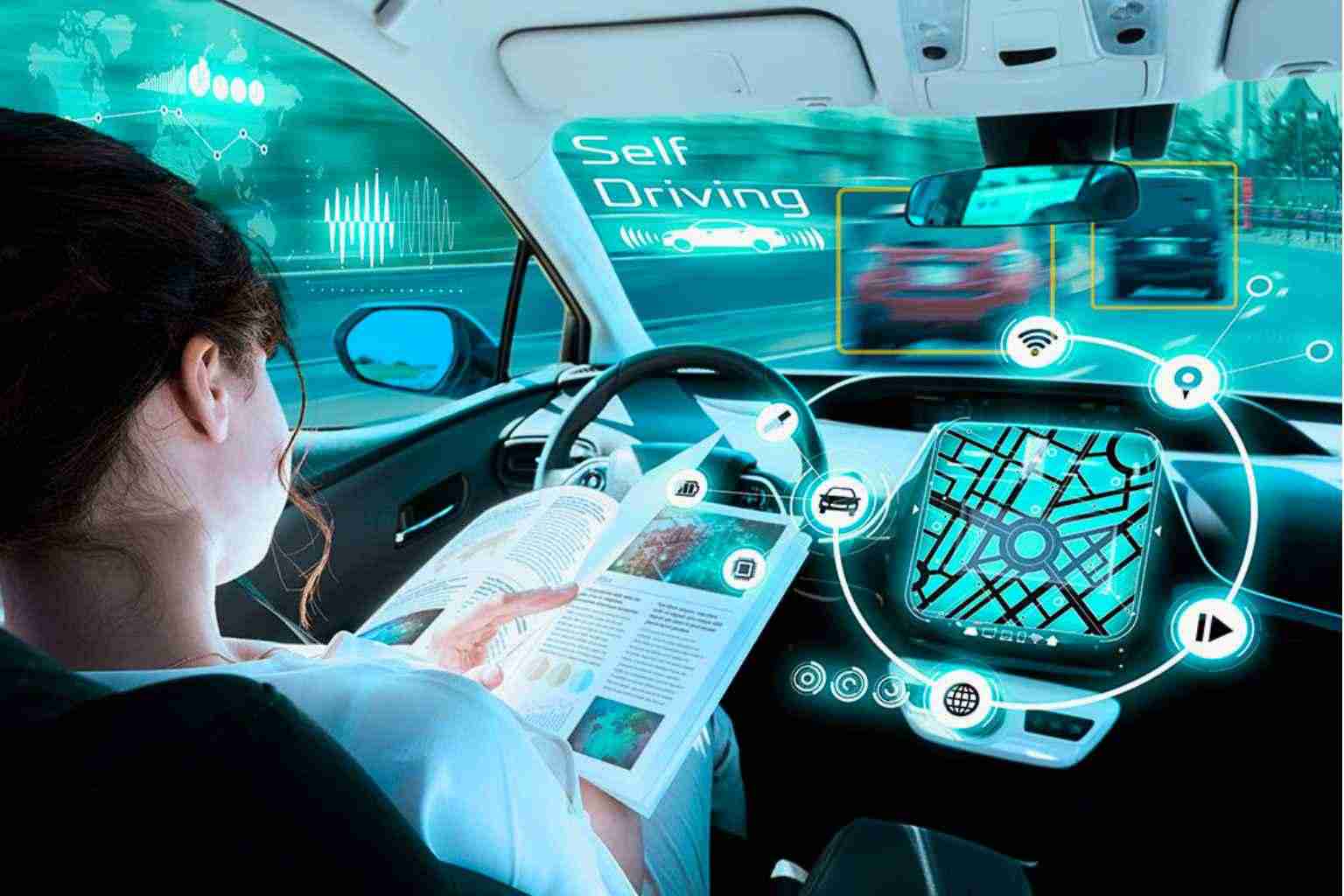
It’s something that has always taken human judgement, experience, reflexes. But with the rapid progress of artificial intelligence, cars have begun to see, think and act on their own. Self-driving cars crunch huge amounts of data to learn on the fly from millions of miles driven by humans, and so can react quicker than the average human. Which brings us to the rather serious question: Are they capable of learning to drive better than even we, the grand omniscient humans?
1. The True Definition of AI in Autonomous Driving
The AI in driving pertains to the computer systems that enable cars to see, hear and make better decisions. They use sensors, cameras, radar and software to detect lanes, cars, pedestrians and road signs. The concept is to replace or, more often, augment human decision-making with intelligence gathered from data.
2. How Humans Learn to Drive
People learn to drive rule of law style: you were taught and supervised and some things worked and some didn’t; that’s how we learned. We rely on our guts, memory, visual perception. We can also be creative, But we are susceptible to both boredom and fatigue, emotions that lead to distracted driving, stress and errors on the road….”
3. How AI Learns to Drive
AI is taught by crunching through enormous amounts of driving data. It uses millions of miles of logged trips to analyze traffic patterns, road conditions and driver behavior. By continually learning, A.I. gets better and makes fewer mistakes with time something humans cannot do at scale.
4. Reaction Time and Accuracy
AI also offers the advantage of speed of response. And AIs can respond in just milliseconds far faster than human reflexes. They aren’t getting drowsy and they aren’t distracted and that means they tend to be more consistent when maintaining speed and distance, or keeping their lane discipline, during long trips.
5. Handling Complex Traffic Situations
Traffic, of course, has its unpredictability’s all the sudden stops and jaywalkers and swinging weather. AI can simultaneously process dozens of variables and ascertain the “safest” action (by probability). However, atypical or rare situations forever frustrate AI systems where human fluency could have the potential.
6. AI-Destination Cars and Safety Benefits
The safety advantages of AI in driving are many:
- less human error = less accidents.
- Better lane and speed control
- Faster response to obstacles
- Continuous attention without fatigue
- Drive safe when visibility is poor
It’s not difficult to see why these benefits would make AI a road safety savior.
7. Drawbacks of AI vs Humans
Yet for all its triumphs, AI is also ugly. It depends greatly on the quality of data and dependability of the system. The streets themselves, with shocks in the road character, ambiguous markings or even issues with a system suddenly confounded by what it’s faced with, pose their own challenge. For example people are able to improvise in new context even when they do not have the necessary data to support their behaviour.
8. Trust and Responsibility in AI-Driven Driving
It\’s trust that counts That\’s obvious Trust will be a massive factor in the uptake of AI powered cars. You need people to trust that systems work and are safe. The liability for accidents and even software bugs and ethical decisions are also still being hashed out between regulators and manufacturers.
9. Learning by Doing: AI Helping Human-Car Drivers
A.I. doesn’t replace us in most cars today; it assists and lassoos what the humans can’t seem to remember for saving itself. Features like lane assistance, adaptive cruise control and collision warnings aid drivers while cutting risk. This combination of human judgment and AI thoroughness is frequently the right response.
10. Will AI Ever Be Good At Driving A Car Better Than Us?
Humans can’t be as quick or reliable, nor process data enough to compete with AI. But it will take considerable time to drive out human drivers nationwide. The future likely involves AI doing the majority of driving work, with humans monitoring especially for particularly difficult or emotional tasks.
Key Takeaways
’Two visions of AI’s impact on drivers says nearly 1,000 people are killed per day in similar crashes. So the current moaning both misdiagnoses the alleged disease (it’s not always clear that driving your own car is so much fun) and risks impeding its cure… Even now, when AI is able to react more quickly and accurately than a human can in fact it never gets tired or distracted it still has trouble dealing with things that seldom happen. Far from replacing human driving entirely, the near future indicates a kind of partnership in which AI enhances a driver’s abilities and gradually assumes control as technology and trust progress alongside each other.
FAQs:
Q1. Is there A.I. that can already drive better than humans?
In a controlled environment, AI might be more consistent but humans are still better in unpredictable scenarios.
Q2. Is AI driving safer than human driving?
AI reduces the human-error accidents, but it is not fail safe.
Q3. Do AI vehicles learn and become more intelligent over time?
In contrast, they are trained that is to say learn-on-the-fly from the massive datasets as well as a driving recorded in a real-world scenario.
Q4. Will AI make human drivers obsolete completely?
Not immediately. So it’s really important that humans are overseeing these things for a long time to come.
Q5. What is the hardest thing to drive for A.I?
How to handle rare, unexpected events and build trust.
