

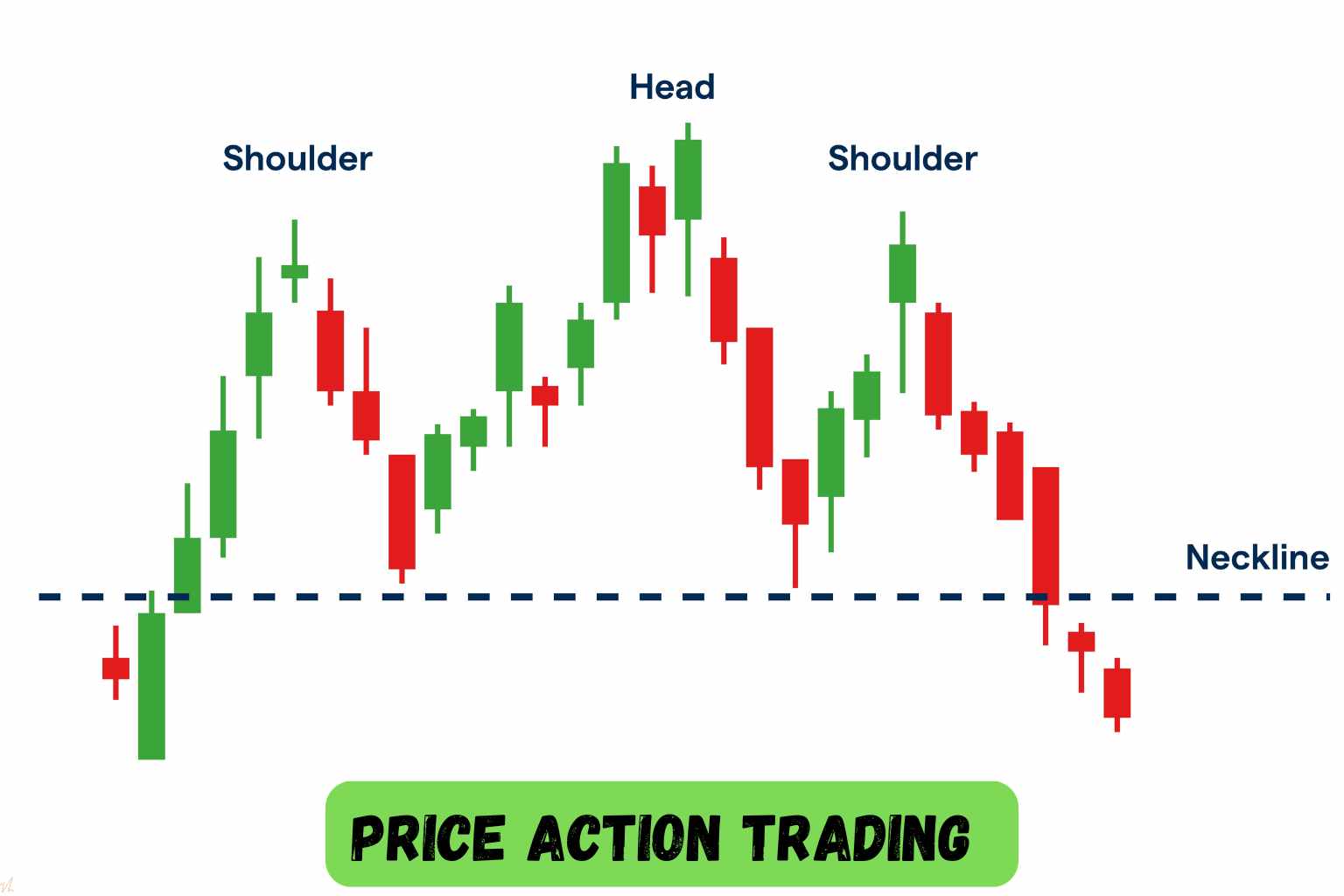
You see, trading looks complicated because charts are packed with indicators, signals and alerts. That’s comforting for beginners, but it can also lead to doubt and slow action. Action price trading is a different animal completely. It studies what price itself is doing and doesn’t use a slew of indicators. Why read raw price action To try and understand the market in a simpler, more meaningful way. The reason for this simplicity is why most seasoned traders gravitate towards price action away from the complexity of indicators.
1. What Is Price Action Trading Anyway?
What is price action trading? Traders are studying candlesticks, highs and lows, trends and key levels on their charts. And instead of chasing indicator signs, they watch in real time how traders buy and sell.
2. Why Indicators Often Create Confusion
Indicators are derived from historical price data. This is because they react very slowly to price. And when traders layer on more than one indicator, signals frequently clash. And one indicator tells you to buy while the other says sell and then your decision-making becomes clouded & you miss an opportunity/testify.
3. The Honest Indicator Is Price
All indicators are based on price and only price has no lag. It’s indicative of real buying and selling decisions being made in the market. By these two principles, traders can circumvent lagging and be closer to what the market is actually feeling.
4. Understanding Market Structure Through Price
Price action assists traders in gaining market structure. Higher highs and higher lows indicate an uptrend. Afternoon lower highs and lower lows are typically a sign of a downtrend. Sideways movement signals consolidation. This framework puts every trade in perspective and reduces haphazard decisions.
5. Support and Resistance Made Simple
Rather than using indicator based levels, price action traders take into consideration areas where price has stacked up on multiple occasions. These support and resistance zones represent where buyers or sellers have overwhelming strength.
- Areas where price previously reversed
- Zones with multiple rejections
- Breakout and retest levels
- Psychological round numbers
- Long wicks showing rejection
These signals are typically more reliable than the indicator levels.
6. Candlestick Behavior Tells a Story
Each candlestick is a battle between buyer and seller. Long wicks indicate rejection, strong bodies momentum and small candles indecision. Those clues within the price action are what clear and sensible price action traders read to assess strength or weakness with no other tools.
7. Fewer Indicators Mean Better Focus
Chart clogged with indicators can cloud traders judgment over what really matters. Plainer charts lead to more focus, discipline and confidence. This is when traders begin to have the patience to wait for clear setups and stop trying to trade off of every signal change.
8. Price action can be applied to all markets
Price action is popular for a reason, and that’s because of its versatility. It applies to stocks, crypto, forex and commodities. Because price action is universal, the concepts discussed can be applied to any market and timeframe.
9. Common Challenges With Price Action
Understanding Price Action Trading is Simple, Not Easy:
- Requires patience and screen time
- Requires the user to home in on patterns Requires practice to read patterns accurately
- No fixed buy or sell signals
- Demands emotional control
- Learning curve for beginners
Yet, these struggles actually teach traders real skill rather than reliance on an indicator.
10. Why Experienced Traders Choose Simplicity
Most traders eventually learn this, that complex systems by themselves do not ensure consistency. Simpler techniques are less complicated to repeat and handle. Price action teaches discipline, rational thinking and superior risk management which are more important than perfect entries.
Key Takeaways
ActionPrice trading has shown that the most simplest method continues to excel in traders testing success. By concentrating your trading on price action instead of a bunch of lagging indicators, traders will eliminate much of the confusion and can make better decisions. It’s something that comes with experience – but price action gives you a much cleaner read on the markets, and better long term trading discipline.
FAQs:
Q1. What is the meaning of price action trading?
It is price action trading using no indicators.
Q2. Is PA superior to indicators?
It’s faster, clearer and less confusing, which is why many traders like it.
Q3. Is it possible for newbies to learn price action trading?
Yes, a beginner can learn it with practice and patience.
Q4. Is price action applicable to crypto and forex?
Price action is king- It works on all timeframes and markets.
Q5. Are indicators useless in trading?
No, but using only indicators can lead to you making decisions with delays and low clarity.
